Youtube Video Update 5

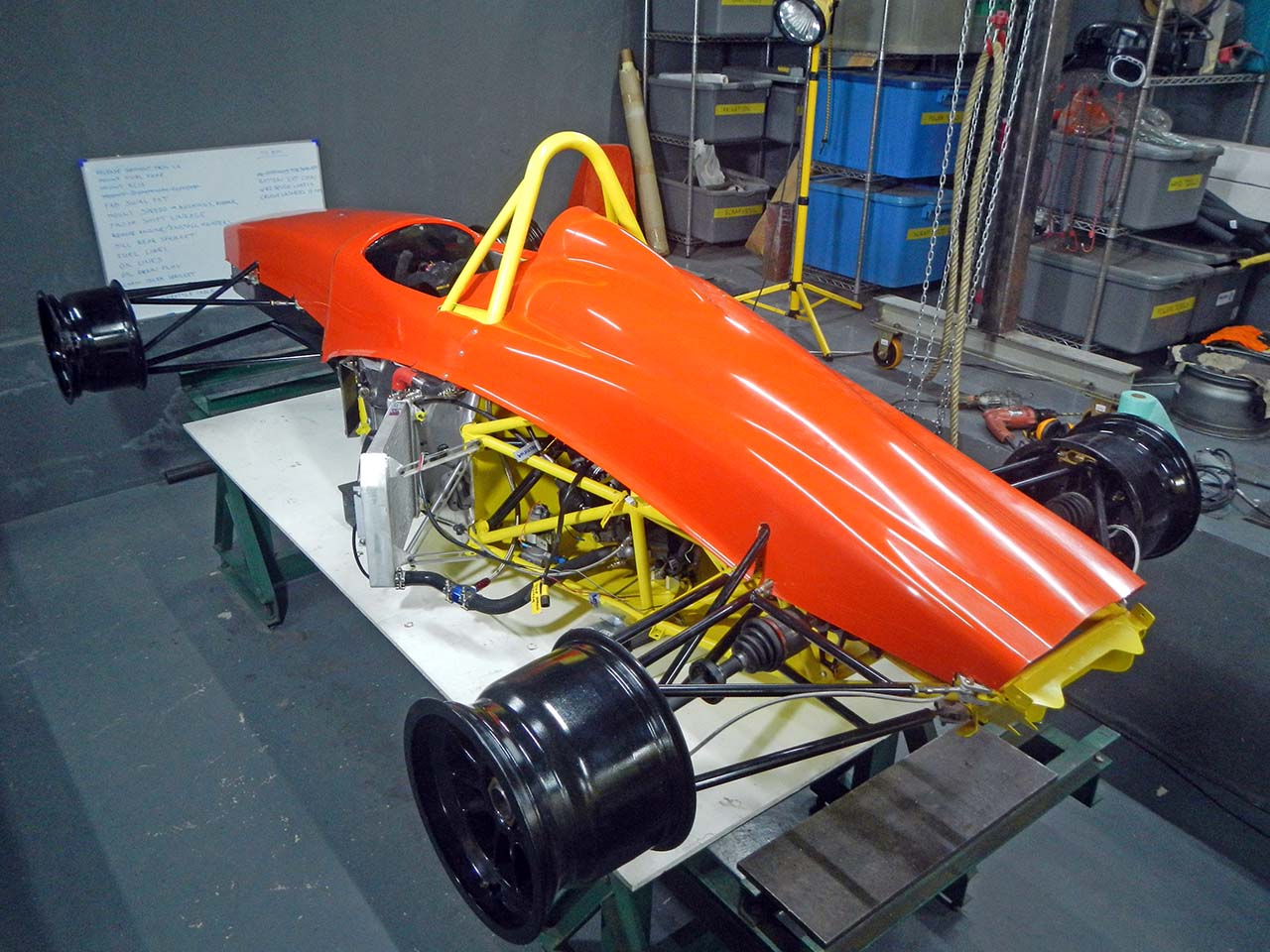
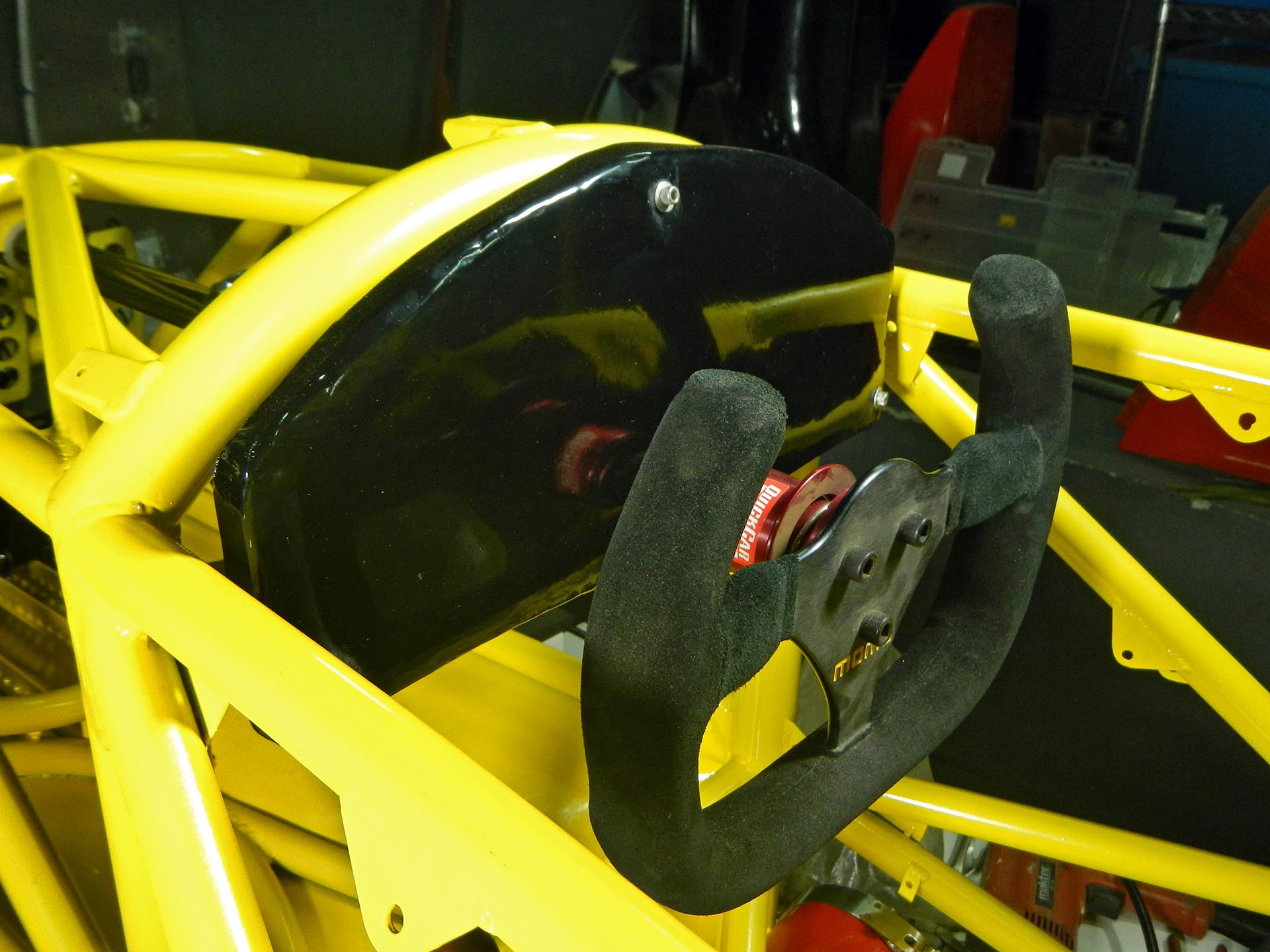
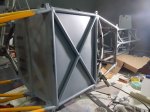
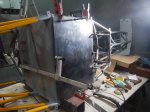
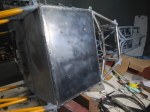
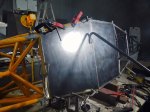
I just uploaded Video Update 5 to Youtube for those who like their pictures to move. This video shows the mounted differential, engine, shifter, fire extinguisher, dashboard, steering column, master cylinder reservoirs, “floor”, pedal cluster, steering rack, suspension rocker arms, front springs & shocks, fuel pump (moved later), and shoulder harness mounts.

Youtube Video

Engine installed, along with lots of other pieces. Click to watch the video.

How to Install a Low-Profile Oil Pan on a 2007-2008 K7 GSX-R1000 Engine

Installed

Low-profile bike-engined car or motorcycle-engine car billet aluminum oil pan installed on a 2007-2008 K7 Suzuki GSX-R1000 engine

When building a motorcycle-engine car, the oil pan has to be replaced with a flat-bottomed pan. This allows the engine to sit flat on the floor pan of the car, lowering the center of gravity. Also, the g-forces experienced by a car engine are completely different from those seen by a motorcycle engine. When a motorcycle corners the forces are still straight down through the centerline of the engine, whereas when a car corners the force pushes the oil to the side of the engine. Through sad experience this was found to make the engines explode. A proper flat-bottomed oil pan has a separate compartment for the oil pickup, connected to the rest of the pan by one-way flappy doors that keep the oil near the pickup during cornering and braking. Note that some flat-bottomed oil pans are made for stunt motorcycle riding and so use a swiveling oil pickup. The car-racing guys don’t have enough experience with these, so don’t use them. Your engine may explode, and this would be bad.

As it seems no one on the Internet has ever explained how to install such an oil pan before, so here it is. My oil pan arrived without even a word of explanation, yet the operation detailed here is fairly important. As in, your engine is toast if you try to start it without doing this. Now that the Thai government has prohibited importation of all used motorcycle parts, my engine is now completely irreplaceable.  So that would be bad.

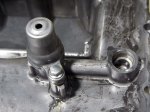
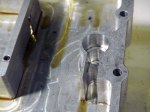
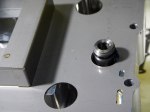
2006 and earlier GSX-R1000 models had the oil pressure relief valve sandwiched between the engine block and the oil pan. In 2007 Suzuki moved the valve to a new housing closer to the center of the oil pan, connected by a passageway to the original location. In the original location they replaced the valve with a simple cylindrical connector gizmo with o-rings at each end so that oil would still flow to the new valve location. This gizmo is popped out by hand and discarded, and the oil pressure relief valve is flipped top for bottom and inserted in its place. This should become clearer in the photos below.

As I’d really like it if my engine didn’t leak, I’ve used Permatex gasket sealant on all sealing surfaces and around the heads of the oil pan mounting bolts. The original oil pan used special gasket washers under the mounting bolts that had fallen by the wayside at some time in the past, leaving my engine with just two out of fourteen. Since I couldn’t find these anywhere on the Internet outside of a complete engine-rebuild gasket set, I sourced 6mm copper crush washers in their place along with new 6mm x 40mm socket head cap screws as the original ones won’t work with the new oil pan. Has to be socket-head cap screws; hex head bolts will just sit on the outside of the oil pan as their head won’t fit into the counterbores in the oil pan. Needless to say, all this required many trips to the hardware store and much Internet research. You’re welcome.

UPDATE: A tip of the hat to the guys on ApexSpeed.com, in particular Gary Hickman of Edge Engineering, who jumped right in with all the know-how and history to figure out what’s going on here. You can see (and buy) the latest version of these oil pans here: EdgeCNC.com .

Painting the Frame

Painted Frame

Painted frame, back in the lab

As you’ve probably figured out from looking at some of the photos below, I’ve painted the frame. I used Jotun Penguard 2-part epoxy right over bare metal after cleaning the metal with wire brushes and acetone. It took a few days as I had to let it cure before turning it, and all four sides had to be painted in turn in order to get every spot. No magic here, just lots of elbow grease.

Shaping the Dashboard

Finished Dashboard

Finished dashboard

I wanted to have a generic surface for mounting various switches and different permutations of gauges and data loggers, so I built a dashboard by shaping it from a flat sheet of aluminum. I thought it would only take a day, but it took a bit longer. Given that this is only my second attempt at metal shaping, the result is surprisingly good and it ways next to nothing. Take a flat sheet of aluminum and start pounding the crap out of it until its the right shape… (I may be oversimplifying a bit here) then weld the corners.

Fabricating the Pedal Cluster

Voila!

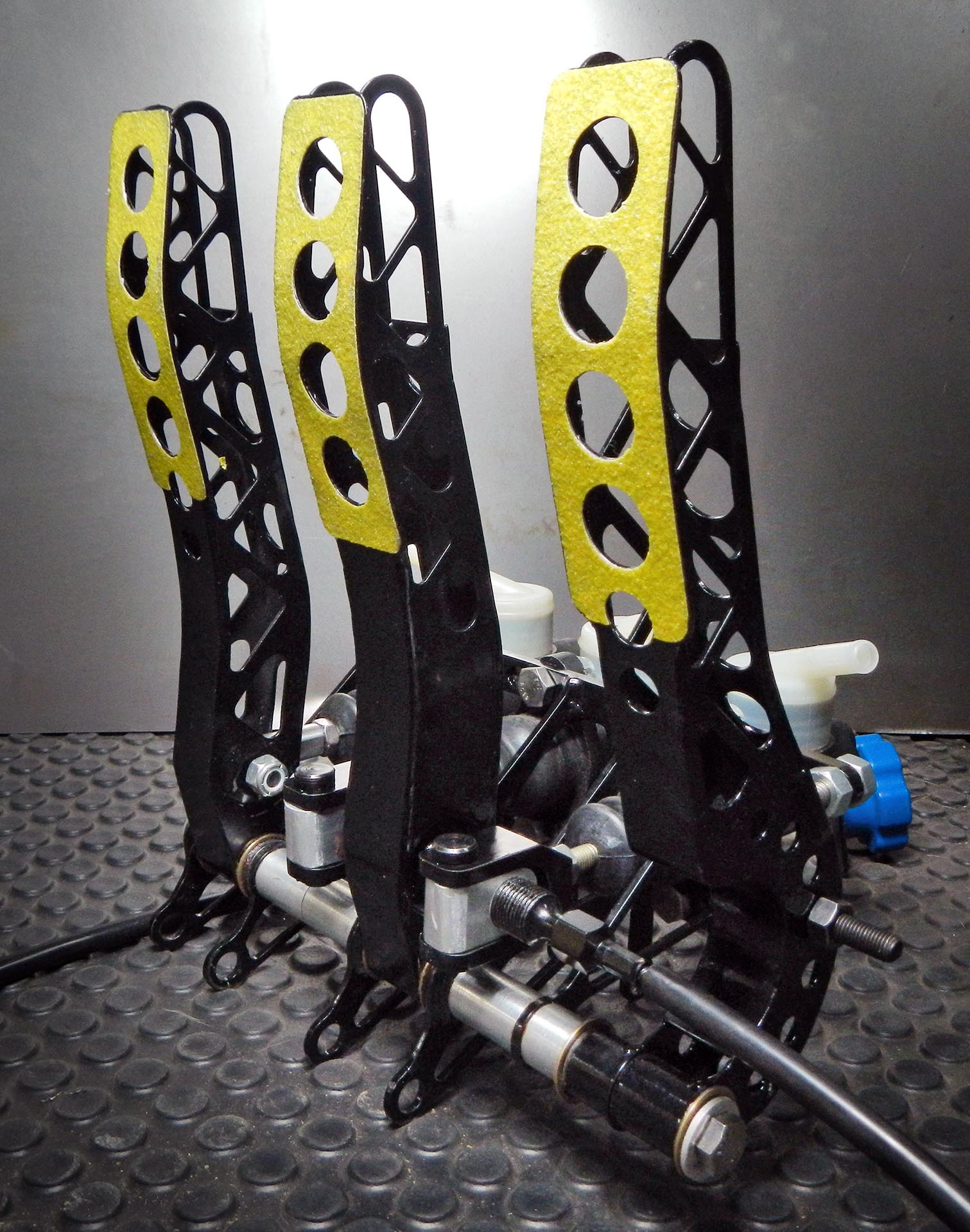
Finished pedal cluster

Here’s a big project that spread out over a number of months. I’m aggregated the photos here and attempted to make them tell a coherent story.

The cluster as a whole can be adjusted forward and back for drivers of different heights. The gas pedal is adjustable for foot travel, throttle cable travel and left/right position. The brake pedal height is independently adjustable, and brake bias is adjustable from front to back. The hydraulic clutch pedal is also independently adjustable for height.

Many of the original pieces were laser cut from steel, then bent and welded to form the complex shapes required. Some of the bushings were CNC turned, but most were made by hand. The master cylinders, brake bias adjustment cable, and the nuts and bolts were purchased, with everything else custom made. This includes the brake bias adjustment assembly, which forced me to learn how to cut threads on the lathe. It’s not as easy as it looks. Take a look at the brake bias adjustment bar– it has three sets of threads independently cut on a manual lathe, three diameters, two snap rings and a threaded hole. Good fun! Due to changes in the steering rack mount, the main pedal bracket had to be widened as you can see in the photos.

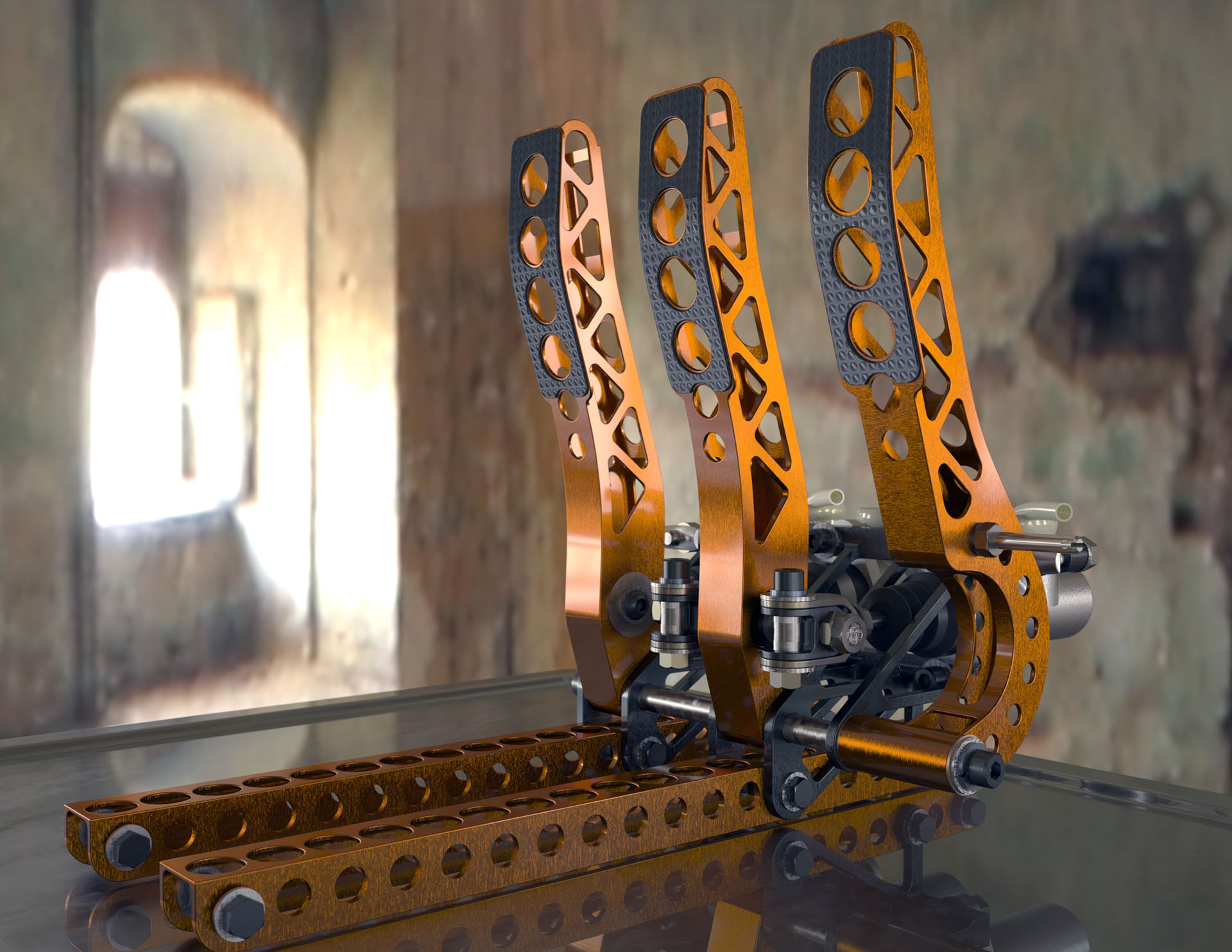
Computer Rendering

Computer rendering from early 2011

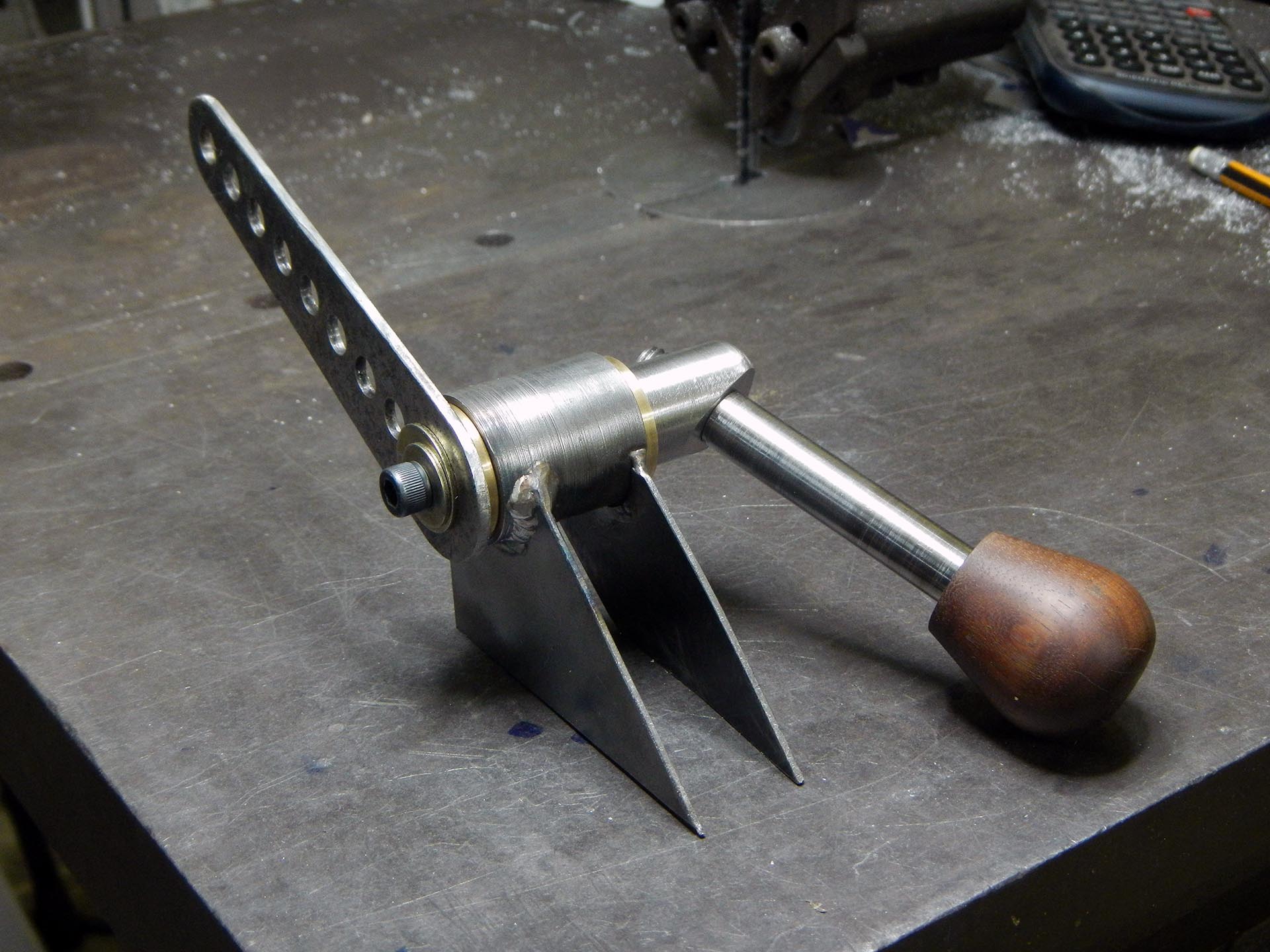
Fabricating the Shifter Assembly & Linkage

Assembled

Assembled shifter mechanism

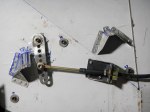
I looked through a bunch of street car transmission shifter cables, brought a couple of them back to the lab, and decided on one that was the correct length, light, and low friction. Everything else was fabricated…

The car will use a Suzuki GSX-R1000 engine, which has a 6-speed sequential transmission, meaning the shifter only has two movements: shift up, and shift down.

Attaching the Body

Starting to look like a car

Almost finished mounting the body

Not much to say about this one… Just lots more piddly little brackets. The large bracket at the tail is necessary as that will be where the rear impact absorber will mount. Had to make some changes just behind the driver’s left shoulder to allow access to the fuel filler.

Paneling the Cockpit


Cockpit Panels

Fully paneled cockpit

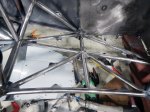
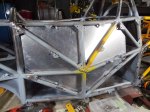
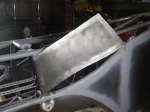
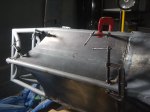
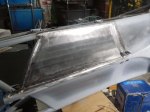
While the sides of the cockpit already have side-intrusion panels on the outside, they will also have a second panel on the inside to prevent the seat foam from extruding between the frame tubes and pushing on the outside panels, something those outside panels aren’t equipped to properly resist. The interior panels also must follow the SCCA rule against stressed skins that requires chassis attachment points to be more than 6 inches apart. Due to their different shape and size, the interior panels have a completely different mounting pattern and can’t share any of the exterior panel mount points. Thus, many more tabs are cut and welded on.

The seat back is formed by the fuel tank and three additional pieces of aluminum, shaped at the sides to provide shoulder support on the front while providing space and access at the back to the fuel pump on one side and the fuel filler on the other. The center section is removable to access the shoulder harness mounting points.


Building the Floor Pan, Floorpan, Belly Pan, Whatever

Floor Pan

Formula 1000 race car floorpan with front keel

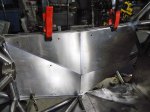
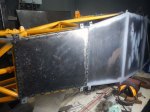
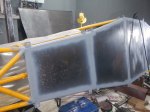
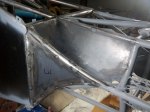
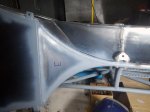
In my continuing effort to get everything welded onto the frame so can paint it, it’s time to build the floor pan. SCCA rules allow the floor pan to be a stressed skin, so this one fully welded around outside and to all crossmembers. To anyone who wants to learn to weld better, I recommend welding a floorpan. That’s a lot of welding. None of these pieces were laser cut– templates were made in plastic sheeting, transferred to sheet steel, and cut out with an angle grinder. Wear hearing protection. And eye protection. And lung protection. And heavy gloves up to your elbow. Angle grinders can mess you up.

The floor pan around  front keel is of special interest. Some parts have a single curve which is easily fabricated, but two of the pieces have a compound curve which can’t just be bent. They have to be pounded into submission to make them fit. As this is my first attempt  at metal shaping, I started out tentatively. After a lot of pounding I was getting nowhere and got angry. It turns out this is what you need to do. Pound the crap out of it, then fix the area around the big dent you just made, and eventually it takes shape. An English wheel would have been useful, but building or buying one is a big project.

There are two layers of steel under the fuel tank and the driver’s butt, one under the legs. Should be stiff, strong, and safe. And now, on to the photographs. I suffered through this. Now it’s your turn: