Mounting the Side Impact Panels

Side Panel

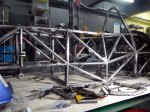
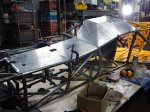
Aluminum side impact panels finished and mounted

SCCA Formula 1000 rules require side-impact protection consisting of either kevlar laminated to the inside of the body, or 0.060″ aluminum or 18-gauge steel bolted to the frame. To keep the side impact panels from being used as a stressed member, attachment points to the frame must be more than 6″ apart. Mine are laser cut from 1.6 mm aluminum. The mounting holes were also cut by the laser to be sure of the 6″ rule, but this was a mistake as it made the mounting tabs much harder to fabricate. It would have been much easier to weld the tabs in place with holes already drilled, then drill through the tabs to the aluminum panels for exactly aligned holes. As you can see from one of the photos below, the panels fit perfectly. This project was a lot of cutting and welding with little apparent progress.

Building the Axle Halfshaft Extensions


Rear Suspension

Rear suspension, axles and differential in place

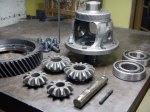
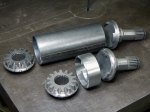
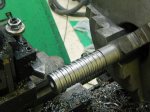
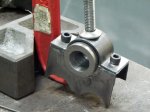
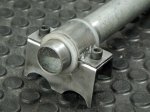
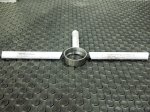
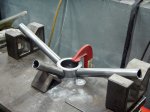
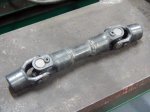
The car will use standard Honda Civic axle halfshafts, and I had the choice of cutting, sleeving and re-welding them, or building extenders that effectively widen the differential to meet the unmodified halfshafts. The cut/sleeve/re-weld option would eliminate the axle hardening and leave unknown strength, and I’ve since seen an example where this was done and the axle broke right at the weld. The option of “widening” the differential has several advantages. First, we can easily replace the halfshafts if necessary in the future with off-the-shelf parts. Second, moving the inner constant-velocity joint closer to the plane of the control-arm pickup points minimizes the plunge, or change in length, required as the suspension moves through its travel. Third, the halfshafts become equal length, eliminating torque steer. Now you may say “but, the extensions will be of different length and will twist unevenly so the torque steer won’t be eliminated”. The extensions will be much stiffer than the axle shafts so that won’t be the case.

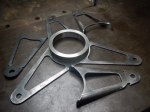
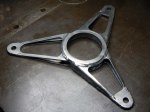
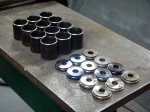
So the choice was clear. We started with a differential and a couple of halfshafts as raw material…


Mounting the Rear Sprocket

Mounted

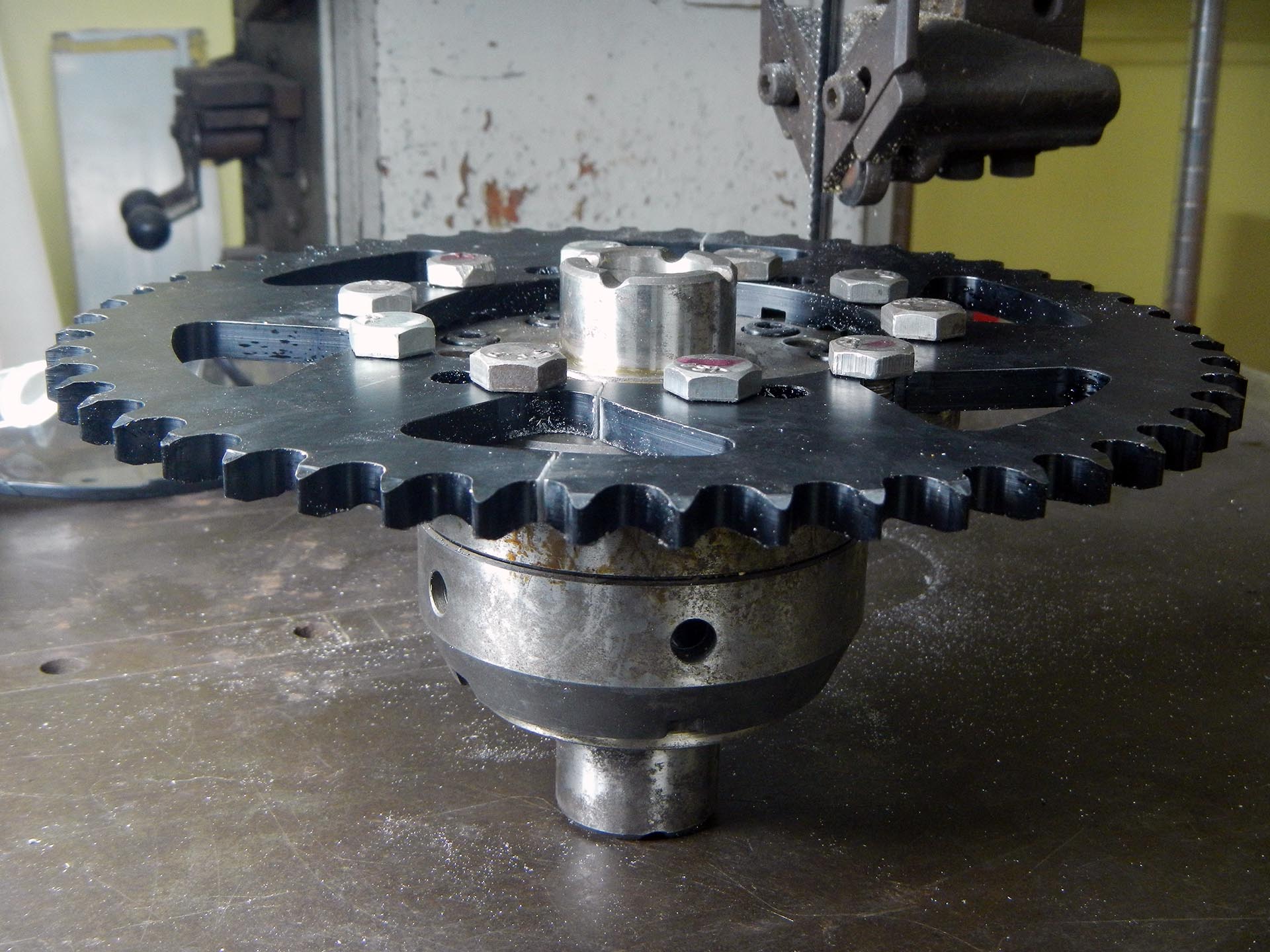
Rear sprocket mounted on the differential

The limited-slip differential is a torsen or quaife type made by OBX, imported from the USA for an American-style Honda Civic. The differential ring gear on American Honda Civics is mounted with left-hand threaded bolts, so I blithely go down to the auto recycler here in Thailand and buy a differential for donor parts. Hmmmm… these bolts don’t fit. So I check carefully and find these differentials are sold in Thailand with right-hand threads! I go back to the auto recycler and ask for left-hand threaded bolts. They just look at me with that “crazy foreigner” look. OK, all we have to do is order some American-style bolts from Ebay US… There is exactly one listing on all of Ebay, and they don’t ship to Thailand! Plan B: drill the suckers out and use through-bolts.

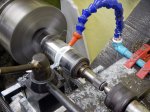
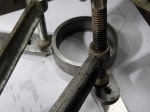
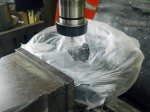
This is where I find out the differential housing is made of some ultra-hard tool steel, or maybe kryptonite or something. Wow, are these holes difficult to drill out. Solid carbide end mill, highest speed on the milling machine, lots of lubrication, and wait. And wait. And wait…

Next we had to drill a matching hole pattern in the rear sprocket, then cut it in two halves for quick changing at the track. This sprocket will be for static test only as the new hole pattern wasn’t compatible with the old one, leaving thin aluminum in some places. I’ve since ordered a blank rear sprocket from England which I will cut with only the correct holes.

Fabricating the Differential Mounts

Finished Diff

Finished differential, differential mounts, and rear sprocket

Thirty-four years ago I designed a car for the SAE collegiate Mini-Baja competition. The differential was inadequately supported in the middle, and although it didn’t break on us, it broke the next year and sidelined the car. I’ve felt guilty ever since, so that’s one mistake I’m determined not to repeat. This one should be adequate…

Later I plan on fabricating some sort of container or plugs to keep the oil in the diff.

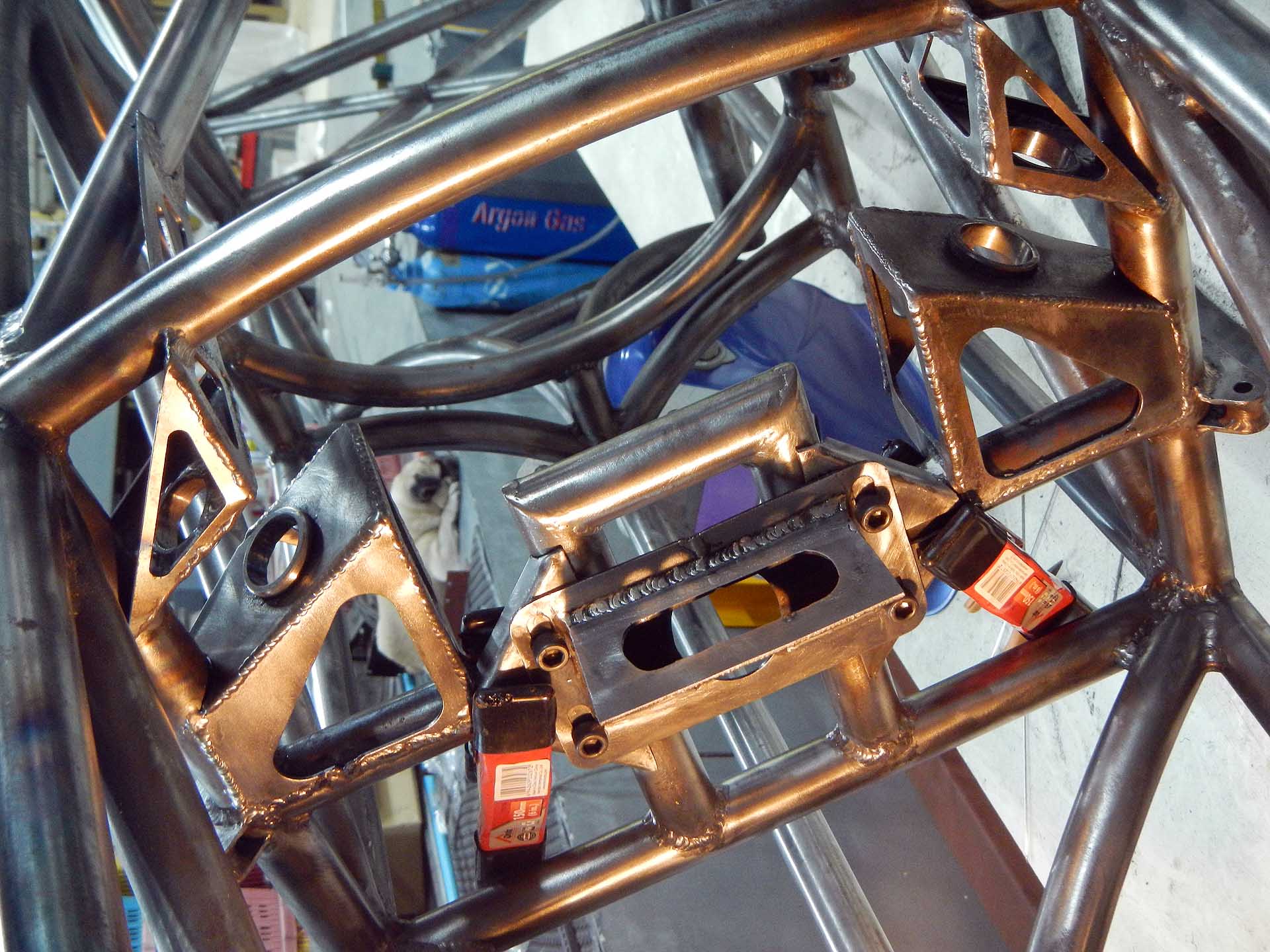
Fabricating GSX-R1000 Engine Mounts

Sorry for the long delay since the last blog entry. A lot of water has gone under the bridge since then. But don’t worry, the project has continued, although with some big distractions. I’ll be trying to catch up on my blogging in the next few weeks.

Next up is fabricating the engine mounts for the 2007-8 Suzuki GSX-R1000 motorcycle engine. I surveyed the state of amateur formula-car engine mounts, and decided a lot of them are inadequate. This video got me to thinking: https://www.youtube.com/watch?v=m1j7hmJmSJA as my car should be faster than a Ferrari 458. Some might be skeptical of that speed comparison; if you are, take a look at this comparison of a Porsche 911 Turbo versus a formula 4 car: https://www.youtube.com/watch?v=e8WyvVbVu4k . A formula 1000 car should compare favorably with a formula 4 car. Either way, you lose a lot of torsional rigidity with the large open hole to mount the engine, and I hope to recover much of that with a strong triangulated set of engine mounts.


Steering Column Supports

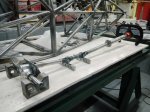
Next up: mount the steering column in the chassis. Nothing magical here, just lots of little steps. The steel bearing cup insert did work well at preventing distortion during welding. To get a proper press fit for the rear support bearing I decided to use my new internal bore gauge. At first it didn’t work at all (made in China, of course), so I had to disassemble it completely, figure out how it was supposed to work, unstick the rusted shaft, replace the dead battery, and reassemble it. All in a day’s work out here on the frontier. So now I can measure both holes and shafts to a few microns and press fits are much easier to make.

Fabricating the Steering Column

I originally sent all these parts out to the CNC shop, but they never got back to me with a quote so I ended up making everything myself. The spline onto the steering rack was a tight press fit, so for now the entire column including the rack is a single assembly. I don’t know it’s possible to remove the rack later, and I’m not going to try as it might destroy the rack. The U-joints are special units from Sweet Manufacturing in the US, but don’t seem to be anything special. In the future I might try to adapt standard Honda steering column U-joints and column splines. These use a perpendicular pinch bolt so the column can be disassembled at each joint.

Designing and Fabricating the Steering Rack Mount

Rack Mount

Steering rack mount, ready to weld gussets.

Next step in getting the car rolling is to mount the steering rack. These parts were not laser cut but were cut with angle grinders and my bandsaw, because they’re, um, a design improvement. Yeah, a design improvement, that’ll work. It took me months to find a blade for my bandsaw, because Thailand. Anyway, now it’s useful for these kinds of tasks.

Once again we have something that looks simple, but took a great deal of thinking to arrive at. As Steve Jobs said, “Simple can be harder than complex: You have to work hard to get your thinking clean to make it simple.” I used to do almost exactly what Steve Jobs did; in fact, he once called my boss to persuade him to cancel the design we were working on, because Jobs was going to do it better (he didn’t). So I understand precisely what Jobs meant about simplicity. That might help explain why this was my fifth complete design for this subassembly. One downside of mechanical design: when you’ve sweated out an elegant design, anybody can take a casual glance at it and say “OBviously”. To which I reply, “OK, there’s probably an even better design out there somewhere. Let’s see you find it.”

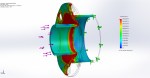
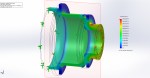
Also attached are a few of the finite element analysis (FEA) tests that I performed to verify and improve this design.

Rear Suspension Rocker Arm Mounts & Nose Mounts

Rocker Bushing

Rear suspension rocker arm mount shaft bushing

Above you’ll see that my welding continues to improve, although slowly. In response to the deleted commenter of the day, yes, we do use dyslexic dwarfs to do our welding, but we get ours from Lithuania. Good guess, though!

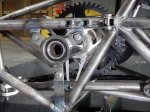
Next we have photos of the rear suspension rocker arm mounts. As these have to be positioned correctly in three dimensions and three axes, and none of those are X, Y, or Z, it took about a week to get these fabricated and fitted. Starting with laser-cut pieces proved useful as that gave me a known-good shape to start from, but some of the frame rails could be a few millimeters off. Also, every time I weld on something it distorts. Both halves of the rocker arm mounts must be precisely concentric and exactly the correct distance apart. Unfortunately they are not connected directly to each other in order to allow for rocker arm movement between them so there’s plenty of opportunity for them to move, even though I did the welding with the rocker arm shafts in place. In the photo with the control arms installed, you’ll see one answer to that: a long piece of steel rebar turned to fit inside the rocker arm shaft bores. Pounding on that with a rubber mallet would move the bores back into alignment a bit at a time.

Also, nose mounts. In the end these look terribly simple, but it took me a lot of thinking about how to do this. They have to be strong enough in one direction to lift the nose of the car with a pivoting jack, and in the other direction they have to support the downforce of the front wing. Also, they can’t protrude or be sharp so as not to injure another driver in a crash while taking the tremendous force of a forward impact, and have to allow the nose to be adjusted in three dimensions and two axes for proper body fit. Body installation begins here; the rest of the body will be keyed off the nose.

Nose Mounts

Nose attachment points laser cut and welded in place.

Part Eleventy-seven, In Which We Finally Lay Up a Body

Finished Body

Another view of finished main body.

Time to lay up the first set of body panels. In some photos you can see the joggles laid into the molds with duct tape so the panels will overlap smoothly. Nine coats of mold release wax and there were no problems releasing parts from the molds, although at times I did have to work a bit. Each mold required about a day of finishing work to remove ripples due to waviness in the body buck. As I’ve said before, don’t build a body buck the way I did it. Instead, immediately after completing the X-Y grid of cross sections, lay about 3mm of fiberglass on top to give a good solid surface, then use body putty on top of that. You’ll be finished in half the time it took me. The only place you should use foam is where actual carving is required due to the complexity of the shape, like the sidepod air inlets. Yes, I know the main roll hoop forward braces are still not there. Patience…

One problem I found out the hard way is that a chemical in some brands of duct tape inhibits gelcoat curing. In the end, gelcoat that had been in contact with some kinds of duct tape never fully cured and had to be cleaned out with acetone. Also, the joggles formed with duct tape were too sharp for the fiberglass mat to conform to, resulting in bubbles under the gelcoat that have to be scraped out and reworked. Gelcoat is probably more trouble than it’s worth given its weight, so next time I’ll just prime and paint the body panels to finish them. The sharp joggle corners need to be filled in with fiberglass roving before laying mat on top.